
Preventive Pool Maintenance or Reactive Repairs: Which Costs Less?
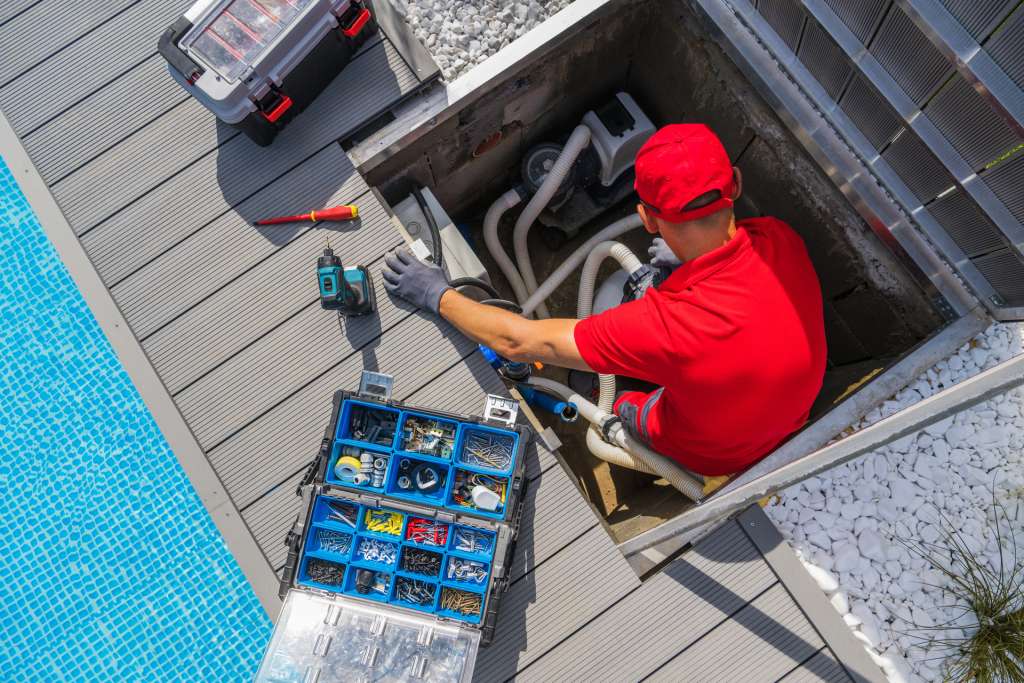
When the pool is clear, the pumps are running and nobody has complained, preventive maintenance can feel like money being spent on a problem you do not have yet. That thought is understandable, especially when building budgets already have plenty competing for attention.
Pool equipment, however, often gives warning before it fails. A seal can begin leaking, filter pressure can drift and a bearing may become noisier while the system continues operating. Catching those changes gives you time to decide what to repair and when. Once equipment stops completely, the repair may be the same, but the circumstances around it can become much more expensive.
What Are You Really Paying For?
At first glance, reactive maintenance can appear cheaper. You avoid regular technical checks and spend money only when something fails.
That comparison works only if the cost of the failure stops at the replacement part. In a shared pool, it often does not. A breakdown can mean an urgent contractor visit, an unplanned closure and very little time for management to review options before approving the work.
Preventive maintenance shifts more of that process into a period when the equipment is still running.
| Preventive Maintenance | Reactive Repair |
| Faults can be found while equipment still operates | Diagnosis begins after a noticeable failure |
| Repairs can often be scheduled | Work may need immediate attention |
| Condition can be tracked across visits | There may be little warning before the breakdown |
| Budgets and approvals can be planned | Costs arrive unexpectedly |
| Smaller defects may be addressed earlier | Related damage may already have developed |
| Previous readings and photos support diagnosis | Technician may have to diagnose from the current fault alone |
This does not make every preventive visit a money-saving exercise on its own. Its value is cumulative. Each inspection gives you another chance to notice that something is moving away from normal before it becomes an operational problem.
Small Faults Are Usually Cheaper While They Are Still Small
A pump seal beginning to drip is a good example. At that stage, the pump may still be circulating water normally and the repair can potentially be arranged around the property’s schedule.
Leave the leak long enough and the situation can change. Persistent water around mechanical and electrical equipment can contribute to deterioration, while an unresolved pump problem may eventually interrupt circulation altogether. What began as one repair now has the potential to affect other parts of the system.
The same principle applies to filter performance. A pressure gauge that is steadily climbing may simply show that the filter needs routine attention, while pressure behaving abnormally after cleaning can point towards a restriction or another issue that deserves investigation. Manufacturer guidance commonly uses the rise above a filter’s clean starting pressure as a maintenance trigger, rather than an arbitrary calendar date.
That is the advantage of having a normal baseline. You notice the change before the pool forces you to.
Preventive Maintenance Gives You Time to Make Better Decisions
For managing agents, the most useful saving is sometimes not a cheaper component. It is avoiding the premium that comes with urgency.
Suppose an inspection finds that a pump motor is deteriorating but still operating. You can obtain a proper recommendation, check whether repairing or replacing it makes more sense, arrange council approval and plan the closure if one is needed.
If the motor fails first, most of those steps still have to happen, except now circulation has stopped and the clock is running.
That extra decision-making time is particularly useful when the repair involves more than a simple like-for-like part. If the existing equipment is ageing, the better question may be whether the replacement should also address sizing, efficiency or compatibility with the wider system.
Repeated Repairs Can Hide the Real Cost
Reactive maintenance becomes especially expensive when the same symptom keeps being treated without finding its cause.
A contractor may replace a seal every time it leaks. If vibration, shaft wear or poor operating conditions are contributing to those failures, each individual repair may look reasonably priced while the total over a year tells a different story.
Read: 7 Signs Your Pool Contractor Is Treating Symptoms, Not Causes
This is where maintenance records earn their keep. Put the invoices, photographs and technician notes side by side and ask whether the same item keeps appearing.
A $800 problem five times is not a $800 problem. The maths may be simple, but recurring maintenance bills have a habit of hiding themselves across different months.
Preventive Does Not Mean Replacing Everything Early
There is another misconception worth clearing up. Preventive maintenance should not become an excuse to replace healthy equipment simply because it is old.
A useful inspection separates three things: what is working normally, what needs closer monitoring and what needs repair or replacement. Age can inform that assessment, but performance and condition should carry more weight.
The same approach keeps maintenance spending focused. If a pump remains reliable and meets the required duty, there may be no technical reason to remove it. If another unit has required four repairs in 12 months and its performance is still declining, the maintenance history is telling you something different.
Where Preventive Checks Usually Pay Off
Some areas give especially useful early warnings because their behaviour can be tracked from visit to visit:
- Pump noise, vibration, leakage and flow
- Filter pressure before and after servicing
- Chlorinator output and cell condition
- Valve operation and visible pipe joints
- Water chemistry trends
- Underwater lighting and electrical behaviour
- Grout, tiles and other pool finishes
None of these checks is complicated in isolation. Their value comes from noticing when several small changes begin pointing in the same direction.
Planned Problems Are Easier Problems
Equipment will wear eventually, so the goal is not to build a pool where nothing ever needs fixing. It is to find enough of those problems while you still have time to deal with them sensibly. After all, machinery has never been particularly interested in your budget cycle.
Hydrology helps managing agents, MCSTs and facility teams catch developing pool faults through preventive maintenance, technical inspections and photo-based reporting. Our team can monitor pumps, filtration, chlorination, valves and the wider circulation system, giving you a clearer record of what is healthy, what needs watching and what requires action.
If your maintenance plan currently depends on equipment making the first move, engage Hydrology for an inspection or maintenance review. We can help you identify problems earlier, plan repairs with better information and reduce the number of faults that arrive as surprises.